Discover the majestic beauty of Bali’s largest and most impressive water palace, featuring European-Balinese architecture, vast reflecting pools, and dramatic mountain views.
Overview
Taman Ujung Water Palace, officially known as Taman Soekasada Ujung (Soekasada Park), is a magnificent former royal estate built by the last Raja of Karangasem in 1909[1][2]. Spanning 10 hectares, this grand complex is significantly larger than Tirta Gangga and showcases a unique blend of Balinese, European (particularly French and Dutch), and Chinese architectural influences[2][3].
The palace features three large reflecting pools connected by elegant stone bridges, ornate pavilions with red-tiled roofs, manicured gardens, and dramatic mountain and ocean views[2]. Originally built as a place for relaxation and receiving important guests, Taman Ujung represents the cultural sophistication and international connections of the Karangasem royal family[1][2].
Key Information:
- Full Name: Taman Soekasada Ujung (Soekasada means “happy heart” in old Javanese)[1]
- Location: Tumbu village, Karangasem Regency, Southeast Bali
- Size: 10 hectares (significantly larger than Tirta Gangga’s 1.2 hectares)[2]
- Distance: 30 minutes from Tirta Gangga, 45 minutes from Lempuyang Temple[2]
- Opening Hours: 7:00 AM – 7:00 PM daily[3][4]
- Best Time: Morning (8:00-10:00 AM) or late afternoon (4:00-6:00 PM) for best light
What Makes Taman Ujung Special
Architectural Grandeur
Unlike Tirta Gangga’s intimate garden atmosphere, Taman Ujung impresses with its monumental scale and architectural ambition[2][3]:
- Three Grand Reflecting Pools: Vast interconnected pools creating mirror-like reflections of pavilions and sky
- European-Balinese Fusion: Unique architectural blend rarely seen in Bali—combining Balinese temple elements with European palace design[2]
- Elegant Stone Bridges: Multiple ornate bridges connecting different sections of the complex
- Royal Pavilions: Central Bale Gili pavilion surrounded by water, main Bale Loji building with traditional red-tiled roofs[1]
- Sculpture Gardens: European-style statuary decorating terraces and walkways
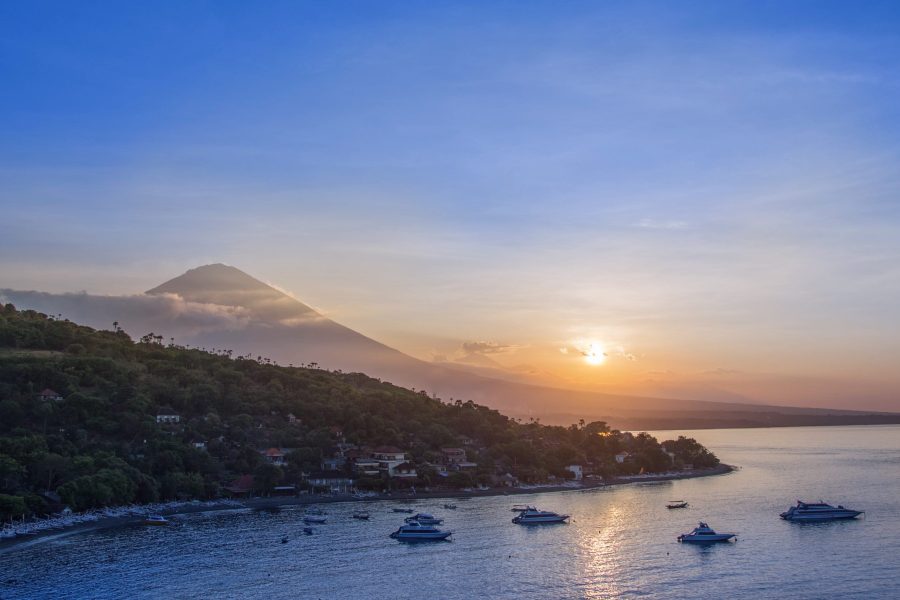
- Panoramic Views: Elevated position offers views of surrounding rice fields, ocean, and mountains (Mount Agung when clear)[2]
Historical Significance
Built over several years starting in 1909, Taman Ujung served multiple royal functions[1][2]:
- Reception venue for international dignitaries and Dutch colonial officials
- Private relaxation retreat for the Raja and royal family
- Demonstration of Karangasem’s wealth, power, and cosmopolitan sophistication
- Reflection of the Raja’s extensive travels to Europe and Asia
The palace showcases the progressive vision of Raja Anak Agung Anglurah Ketut Karangasem, who sought to blend the best of Balinese tradition with modern (for that era) European aesthetics[1].
Dramatic Scale
What distinguishes Taman Ujung from other Balinese water palaces:
- 10x larger than Tirta Gangga in total area[2]
- Multiple terraced levels creating sense of grandeur
- Wide open spaces designed for formal ceremonies and large gatherings
- Monumental architecture intended to impress visiting dignitaries
Entrance Fees & Facilities
Official Entry Fees (2026)
Entry fees vary by source and may have increased recently. Current reported fees[3][4][5][6]:
- Foreign Visitors: IDR 75,000 – 100,000 per person (most sources report IDR 75,000)[4][5]
- Domestic Visitors (Indonesian ID): IDR 35,000 per person[5]
- Children (6-12 years): IDR 50,000 (foreign) / IDR 25,000 (domestic)[5]
- Parking: IDR 5,000 (car) / IDR 2,000 (scooter)[6]
- Professional Photography/Video Permit: IDR 1,000,000 (commercial shoots)[5]
Payment: Cash only (Indonesian Rupiah). Some reports mention occasional card payment availability, but cash is most reliable[3].
Note: Entrance fees at Bali tourist sites are periodically updated. The IDR 75,000 foreign visitor fee is most commonly cited for 2025-2026[4][5].
Facilities Available
- Ample parking area for cars and scooters
- Clean restroom facilities
- Small café/warung serving drinks and light snacks
- Souvenir shop near entrance
- Well-maintained paved pathways throughout complex
- Shaded pavilions for resting
- Photo-friendly viewing platforms at multiple levels
- Information signage (limited English)
Main Features & Attractions
- The Central Bale Gili Pavilion
The iconic centerpiece of Taman Ujung is the Bale Gili—an elegant pavilion completely surrounded by water and connected to shore by stone bridges[1][2]. This structure served as the Raja’s private reception hall for important guests.
Architectural Features:
- European-influenced design with Balinese temple roof
- Elevated platform creating “floating” appearance
- Ornate stone balustrades
- Red-tiled traditional Balinese roof
- Symmetrical design reflecting pool on all sides
Photography: The Bale Gili creates the most iconic photos of Taman Ujung, especially with reflections in calm morning water.
- The Three Reflecting Pools
Three interconnected pools of varying sizes create the complex’s signature aesthetic[2]:
- Main Central Pool: Largest pool surrounding Bale Gili pavilion
- Upper Terrace Pool: Smaller ornamental pool on elevated level
- Lower Pool: Connected by stone channels and bridges
The still water creates perfect mirror reflections of architecture, sky, and surrounding mountains—best photographed in early morning when wind is minimal.
- The Stone Bridges
Multiple elegant stone bridges connect different sections of the estate[2]:
- Arched bridges with ornate balustrades
- European-style bridge design incorporating Balinese decorative elements
- Perfect for photographs from multiple angles
- Allow close-up views of koi and tilapia in pools
- The Main Bale Loji Building
The primary palace building features traditional Balinese architecture with multiple pavilions and courtyards[1]:
- Red-tiled roofs characteristic of Balinese temples
- Open-air pavilions for ceremonies
- Elevated terraces with ocean and mountain views
- Stone carving and decorative elements
- Upper Terraces & Gardens
Explore elevated sections offering:
- Panoramic views over entire complex
- Manicured gardens with tropical plants
- European-style statuary
- Photo viewpoints capturing scale of estate
- Quiet corners for contemplation
Best Time to Visit
Time of Day
- Early Morning (7:00-9:00 AM): Best light for photography, mirror-like water reflections, minimal wind, cooler temperatures, fewest visitors[4]
- Late Morning (9:00-11:00 AM): Good light, moderate crowds, comfortable temperature
- Midday (11:00 AM-2:00 PM): Harsh overhead light, busiest with tour groups, hottest temperatures—less ideal
- Late Afternoon (4:00-6:00 PM): Beautiful golden hour light, dramatic shadows, moderate crowds, pleasant temperatures
- Sunset (5:30-7:00 PM): Spectacular sunset colors reflected in pools (gates close 7:00 PM—arrive by 5:00 PM)[3]
Season
- Dry Season (April-October): Best overall conditions, clear skies, visible Mount Agung backdrop, comfortable temperatures[4]
- Peak Season (July-August): Most crowded but guaranteed good weather and clear views
- Shoulder Season (April-June, September-October): Ideal balance of good weather and fewer crowds
- Rainy Season (November-March): Lush green surroundings, fewer visitors, but Mount Agung often cloud-covered; gardens beautiful even in light rain
Weather Considerations
- Mount Agung visibility crucial for dramatic backdrop photos—best chances in early morning dry season[4]
- Wind affects water reflections—morning typically calmest
- Overcast days create softer, more even lighting (good for photography)
- Light rain doesn’t significantly impact visit (covered pavilions available)
Time Needed
- Quick Visit: 45-60 minutes (main highlights and basic photos)
- Standard Visit:5-2 hours (thorough exploration with photography)
- Photography Enthusiast Visit: 2-3 hours (multiple angles, different lighting, detailed shots)
- Leisurely Visit with Café Break:5-3 hours (comprehensive exploration with rest time)
Visitor Tips & Guidelines
Photography
- Early morning (7:00-8:00 AM) offers best reflections in still water before wind picks up[4]
- Wide-angle lens captures grand scale of architecture and pools
- Telephoto lens good for detailed shots of pavilions and decorative elements
- Central Bale Gili pavilion photographed best from bridge approaches
- Upper terraces provide elevated overview shots
- Sunset light creates dramatic colors in reflecting pools
- Bring polarizing filter to manage reflections and enhance sky
What to Bring
- Cash (Indonesian Rupiah) for entrance fee and any purchases
- Camera equipment with fully charged batteries
- Sunscreen (SPF 50+) and sun hat—limited shade in central areas
- Comfortable walking shoes (mostly paved paths but extensive walking)
- Water bottle (stay hydrated—limited vendors inside)
- Light jacket if visiting early morning (cooler at elevation)
- Umbrella or light rain jacket if weather uncertain
Safety & Etiquette
- Watch children near pools—no barriers along edges
- Walk carefully on bridges—can be slippery when wet
- Respect the historical nature—don’t climb on structures or statuary
- Keep voices moderate—maintain peaceful atmosphere
- Dispose of trash properly (bins available)
- Stay on designated pathways and viewing areas
- Do not feed fish in pools (no fish food sold on-site)
Cultural Respect
While Taman Ujung is a historical park rather than active temple:
- Dress modestly (shoulders covered recommended)
- Behave respectfully—this was a royal estate with cultural significance
- No swimwear or overly revealing clothing (not appropriate for the venue)
- Follow all posted rules and staff guidance
The History of Taman Ujung
Royal Vision & Construction
Construction of Taman Soekasada Ujung began in 1909 under the direction of Raja Anak Agung Anglurah Ketut Karangasem, the last king of Karangasem[1][2]. The raja had traveled extensively to Europe and throughout Asia, exposing him to diverse architectural styles and palace design concepts[1].
Inspired by his travels, particularly European palace gardens and water features, the raja commissioned a grand estate that would serve as:
- A venue for receiving Dutch colonial officials and international dignitaries
- A demonstration of Karangasem’s wealth and sophistication
- A private retreat for the royal family
- A symbol of cultural fusion—respecting Balinese traditions while embracing modern (for that era) European aesthetics[1][2]
The name “Soekasada” comes from Sanskrit/old Javanese, meaning “happy heart” or “joyful spirit”—reflecting the raja’s intention to create a place of beauty and contentment[1].
Architects & Design
The complex design was created through collaboration between:
- The raja himself (primary visionary)
- Dutch architect Van Den Hentz (European architectural elements)[1]
- Chinese architect Loto Ang (contributed design elements)[1]
- Balinese craftsmen (traditional elements and construction)
This multicultural team produced the unique architectural fusion visible today—Balinese temple aesthetics merged with European palace symmetry and Chinese decorative influences[1][2].
Destruction & Restoration
Like Tirta Gangga, Taman Ujung suffered catastrophic damage during the 1963 Mount Agung eruption and subsequent earthquakes[1][2]. The volcanic eruption devastated East Bali, and earthquakes destroyed significant portions of the palace complex.
For decades, Taman Ujung lay in ruins—overgrown, damaged, and neglected[1].
Major restoration efforts began in the 1990s and continued through the early 2000s:
- Indonesian government funded reconstruction
- Royal family provided historical guidance
- Original design plans and photographs guided restoration
- Careful rebuilding of pavilions, bridges, and pools
- Landscaping to restore garden beauty[1][2]
Today’s Taman Ujung, while restored rather than original, faithfully recreates the raja’s vision and stands as testament to Karangasem’s royal heritage[2].
Cultural Legacy
Taman Ujung represents:
- The cosmopolitan outlook of Bali’s royal families in the early 20th century
- Cultural exchange between Balinese tradition and international influences
- Peak of Karangasem architectural achievement
- Symbol of resilience—rising from destruction to restored beauty
- Important historical landmark documenting pre-Indonesian independence Bali
Tour Packages by Excellent Bali Tour
Package A: Taman Ujung + Tirta Gangga Water Palace Tour
Duration: 8-10 hours
Itinerary:
- 08:00-09:00 AM – Hotel pickup (varies by location)
- 10:30-11:00 AM – Arrive Tirta Gangga Water Palace
- 11:00 AM-12:30 PM – Explore Tirta Gangga (stepping stones, koi ponds, fountains)
- 12:30 PM – Lunch at local East Bali restaurant
- 02:00 PM – Drive to Taman Ujung (30 minutes)
- 02:30-04:30 PM – Explore Taman Ujung Water Palace
- 05:00-06:00 PM – Return to hotel
Perfect For: Experiencing both royal water palaces in one comprehensive day—compare intimate Tirta Gangga with grand Taman Ujung.
Package B: Complete East Bali Heritage Tour
Duration: 12-14 hours (extended full day)
Destinations:
- Lempuyang Temple (Gates of Heaven)
- Tirta Gangga Water Palace
- Taman Ujung Water Palace
- Optional: Virgin Beach or traditional village stop
Itinerary:
- 04:00-05:00 AM – Early hotel pickup
- 07:00-10:00 AM – Lempuyang Temple (Gates of Heaven photo)
- 10:30 AM-12:00 PM – Tirta Gangga Water Palace
- 12:30 PM – Lunch
- 02:00-04:00 PM – Taman Ujung Water Palace
- 04:30 PM – Optional beach or village stop
- 06:00-07:00 PM – Return to hotel
Perfect For: Travelers who want to experience all major East Bali attractions in one comprehensive tour—best value for time.
Package C: Taman Ujung Photography Tour
Duration: 6-8 hours (flexible timing for photography)
Focus: Photography-centered tour with optimal timing for best light at Taman Ujung.
Options:
- Sunrise Tour: Arrive 6:30 AM for golden hour light and mirror reflections
- Sunset Tour: Arrive 4:00 PM for golden hour and sunset colors
- Extended Stay: 3-4 hours at palace for comprehensive photography from multiple angles
Includes:
- Flexible schedule based on lighting conditions
- Driver waits while you photograph
- Optional stops at nearby scenic viewpoints
- Professional photography guidance available
Perfect For: Photography enthusiasts and content creators who want dedicated time for quality shots.
Tour Pricing (Private Tour, Per Vehicle)
Package A: Taman Ujung + Tirta Gangga Water Palace
| Pickup Area |
Price (1-6 persons per car) |
| Ubud |
IDR 600,000 |
| Sanur |
IDR 650,000 |
| Kuta / Seminyak / Canggu |
IDR 700,000 |
| Nusa Dua / Jimbaran / Uluwatu |
IDR 800,000 |
Table 1: Both water palaces in one leisurely tour
Package B: Complete East Bali Heritage Tour
| Pickup Area |
Price (1-6 persons per car) |
| Ubud |
IDR 850,000 |
| Sanur |
IDR 900,000 |
| Kuta / Seminyak / Canggu |
IDR 950,000 |
| Nusa Dua / Jimbaran / Uluwatu |
IDR 1,050,000 |
Table 2: Comprehensive tour including Lempuyang, Tirta Gangga, and Taman Ujung
Package C: Taman Ujung Photography Tour
| Pickup Area |
Price (1-6 persons per car) |
| Ubud |
IDR 550,000 |
| Sanur |
IDR 600,000 |
| Kuta / Seminyak / Canggu |
IDR 650,000 |
| Nusa Dua / Jimbaran / Uluwatu |
IDR 750,000 |
Table 3: Flexible photography-focused tour
All Packages Include:
- Private air-conditioned vehicle (sedan or minivan)
- Professional English-speaking driver/guide
- Hotel pickup and drop-off (all South Bali and Ubud areas)
- Fuel, parking, and toll road fees
- Mineral water throughout tour
- Indonesian set lunch (Packages A & B)
- All entrance fees to attractions
- Government tax and insurance
- 24/7 WhatsApp support
Not Included:
- Personal expenses and additional purchases
- Food/drinks beyond included lunch
- Tips and gratuities (optional but appreciated)
- Professional photography permit if doing commercial shoots (IDR 1,000,000)[5]
- Activities beyond standard itinerary
Optional Add-Ons
- Professional Photographer Service: IDR 500,000 for full-day coverage with edited photos delivered digitally
- Drone Photography/Video: IDR 500,000 (spectacular aerial views of palace layout—subject to permission)
- Traditional Balinese Costume Rental: IDR 100,000 per person (for photos at water palaces)
- Extended Tour Hours: IDR 200,000 per additional hour
- Virgin Beach Stop: Add 1.5 hours for white sand beach relaxation
- Traditional Village Visit: Add Tenganan Bali Aga village (30 minutes from Taman Ujung)
Combine Taman Ujung with Other East Bali Attractions
Taman Ujung’s location makes it ideal for combination tours:
Tirta Gangga Water Palace
Distance: 30 minutes
Best Combination: Visit both water palaces in one tour to compare intimate garden design (Tirta Gangga) with monumental architecture (Taman Ujung)
Why: Experience complete Karangasem royal water palace heritage
Lempuyang Temple (Gates of Heaven)
Distance: 45 minutes
Best Combination: Early morning Lempuyang, then afternoon Taman Ujung with golden hour light
Why: East Bali’s most iconic attractions combined—spiritual temple and royal palace
Virgin Beach (Pasir Putih)
Distance: 25 minutes
Best Combination: Morning water palace tour, afternoon beach relaxation
Why: Balance cultural sightseeing with beach time
Tenganan Traditional Village
Distance: 20 minutes
Best Combination: Add ancient Bali Aga culture to water palace heritage
Why: Diverse cultural experience—royal architecture plus traditional village life
Candidasa Beach Resort Area
Distance: 15 minutes
Best Combination: Stay overnight in Candidasa, visit Taman Ujung for sunrise or sunset
Why: Relaxed two-day East Bali exploration without long drives from South Bali
Taman Ujung vs Tirta Gangga: Which to Visit?
Many travelers ask which water palace is better. Here’s honest comparison:
Choose Taman Ujung if you prefer:
- Grand, monumental architecture
- Wide open spaces and dramatic scale
- European palace aesthetics
- Photography of large reflective pools
- Historical royal estates
- Fewer crowds (generally less visited than Tirta Gangga)
Choose Tirta Gangga if you prefer:
- Intimate garden atmosphere
- Interactive elements (stepping stones, swimming pools)
- More lush tropical vegetation
- Hands-on experience (walking on stones, feeding koi)
- Family-friendly activities
- More established tourist infrastructure
Best Solution: Visit Both!
The two palaces complement each other perfectly and are only 30 minutes apart[2]. A combined tour allows you to experience both intimate garden beauty (Tirta Gangga) and monumental royal architecture (Taman Ujung) in one day—together they tell the complete story of Karangasem royal heritage.
Why Book with Excellent Bali Tour?
- Optimal Timing: We know best arrival times for photography and avoiding crowds
- Historical Context: Guides provide detailed stories about Karangasem royal family and palace history
- Flexible Itineraries: Customize stops and duration based on your interests
- Photography Support: Drivers assist with photos at all angles and help you find best viewpoints
- Comfortable Transport: Air-conditioned vehicles perfect for long East Bali drives
- Local Expertise: Drivers know scenic routes, photo stops, and authentic local restaurants
- Transparent Pricing: All entrance fees included in tour price, no hidden costs
- Efficient Routing: Optimized itineraries minimize driving time, maximize sightseeing
- Cultural Insights: Learn about East Bali history, architecture, and local traditions
- Safety Priority: Experienced drivers familiar with East Bali roads and conditions
How to Book Your Taman Ujung Tour
WhatsApp Booking (Fastest Response)
WhatsApp: +62 XXX-XXXX-XXXX (add your actual WhatsApp number)
Message us with:
- Preferred tour package (Water Palace combo, Complete East Bali, or Photography tour)
- Travel date
- Number of guests
- Hotel/pickup location
- Any special interests (photography focus, extra time at specific locations)
- Special requests
We respond within 1 hour with confirmation and payment details.
Online Booking
Visit www.excellentbalitour.com:
- Navigate to “East Bali Tours”
- Select package including Taman Ujung
- Choose date and number of guests
- Enter pickup location
- Add any special requests or add-ons
- Complete booking form
- Receive instant email confirmation
Email Booking
Email: info@excellentbalitour.com
Include:
- Tour package desired
- Preferred date(s)
- Number of guests
- Pickup location
- Contact information
- Any questions or special requirements
We respond within 2-4 hours with detailed information and booking confirmation.
Payment Options
- Bank transfer (BCA, Mandiri, BNI – Indonesian banks)
- Credit/debit card via secure payment gateway
- PayPal (international guests)
- Cash payment to driver (50% advance deposit required for reservation)



Leave a review